
Champagne & Hors d’Oeuvres
Seared Diver Scallop
Japanese Cucumber & Enoki Salad
with Orange Soy Reductions
Grilled Loin of Lamb with
Acorn Squash & Sage Risotto
Sweet Corn Sauce
Heirloom Tomato Salad with
Feta Cheese & Aged Balsamic Summer Melon
~Intermission~
~Sorbet~
Roast Duck Breast with
Sundried Cherries & Port Sauce
Double Chocolate Mousse in
Pogen Cookie Cup & Fresh Berries
That was my 30th birthday dinner menu. It was phenomenal. We ate at The Hobbit in Orange, which I’m glad to report is nerdy in name only.
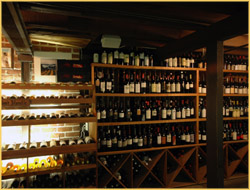
Dinner at The Hobbit is more like a four-hour play in three acts, between which you get up to mingle, select your dinner wines from their cellar, and snoop around the kitchen. I’d never been there before and I have to say it lived up to the legend.
Dinner was part of a larger orchestrated birthday weekend organized by Tammy. My birthday was on Friday, the 6th. We spent Thursday and Friday at Disneyland and DCA. Thursday night we stayed on the concierge level of The Grand Californian where we were treated like VIPs. Friday night we went to The Hobbit. Saturday we rested, and Sunday we had a small gathering of 20ish family and friends at our house to partake in a menu comprised solely of my favorite foods – pizza, hot dogs, alcohol, and ice cream cake.
Being 30 doesn’t feel all that different than 29. It’s easier for me to think of it as “two thirds of my life left to go”. I look back on the first third and I’m proud of my accomplishments! I grew up without developing any mental defects (that I’m aware of) or socially crippling emotional baggage, finished school and got my degree, got a good job with a great company, bought a house, married my better half, and made a freaking baby. These are all good milestones for any 30 year old to have under their belt, I think.
I’m at a good place in my life!